
History of Highway 407: A Canadian Infrastructure Milestone

Updated: Jan 19
Drivers in southern Ontario rarely think twice about tapping their transponder and merging onto Highway 407. It’s simply part of the regional landscape—yet its story is anything but ordinary. The 407 is unique among Canadian highways, marked by innovation, bold political decisions, financial controversy, and unmatched engineering. Unravelling the history of Highway 407 reveals a chronicle of urban development, changing transportation needs, and the ongoing tension between public infrastructure and private enterprise.

The Road Before the Road
Years before the first automobile zipped across what would become Highway 407, Toronto’s population and suburbs had begun to sprawl far to the north and east. By the 1970s, the existing Highway 401 was already choking with cars, especially during rush hour. Urban planners realized that relief was desperately needed, and early strategies included plans for an expressway corridor north of the city.
But laying down a massive new highway is never simple in southern Ontario. Environmental assessments, land expropriations, and changing government priorities continually pushed the project to the back burner throughout the 1980s.
Planners and politicians weren’t just eyeing another strip of asphalt. They were envisioning a model corridor that would address the future as much as current commuter frustrations. What emerged from years of debate was a willingness to think differently about how to fund, build, and operate a highway for the 21st century.
Breaking New Ground With Technology
When serious construction began in the early 1990s, the vision for Highway 407 was already diverging from the norm. What made the 407 radically new was its electronic tolling system—instead of conventional toll booths, drivers’ license plates would be photographed, or small electronic transponders would register each trip. This “open road tolling” technology was practically unheard of in North America at that time, although there were pilot projects in parts of Europe and the United States.
The Ontario government aspired to create a high-speed corridor using innovations that would reduce bottlenecks. The first phase of the 407 opened to drivers in June 1997, stretching from Highway 403 in Burlington to Highway 404 in Markham. Almost immediately, it became the preferred option for drivers willing to pay for speed and reliability, avoiding the gridlock that too often defined the 401.
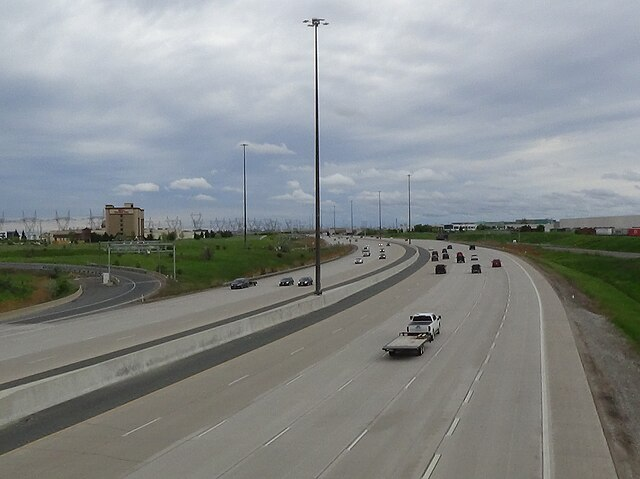
A Quick Overview of the History of Highway 407:
Year | Event |
1970s | Preliminary plans for a new corridor north of Toronto |
Early 1990s | Major construction begins, blending new segments with existing road infrastructure |
June 1997 | First segment opens to public traffic |
1999 | Highway 407 is leased for 99 years to a private consortium |
2001–2016 | Progressive extensions eastward to Pickering, Whitby, Oshawa, and westward beyond Burlington |
Privatization Sparks Controversy
Perhaps the most dramatic chapter unfolded at the end of the 1990s. With the Ontario government determined to reap quick financial rewards, the newly built highway was leased to a private consortium—407 International Inc.—for 99 years. The deal netted the province a whopping $3.1 billion, making it among the largest privatizations of public infrastructure in Canadian history.
There was, however, considerable backlash. The winners of the concession, which included Spanish and Canadian investors, were granted very broad powers to set toll rates and operate the highway more or less autonomously. Motorists soon felt the squeeze, as tolls climbed higher each year with little recourse for the public. This shift from a publicly funded amenity to a “user-pay” model fundamentally changed how Ontarians saw their highways.
Government oversight of the arrangement continues to spark spirited debate. Some hail it as an example of creative financing that freed up public dollars, particularly highlighting projects like the expansion of Highway 407 ETR. Others argue it’s an abdication of responsibility and a case study in the risks of privatizing the country’s core infrastructure. Debates still rage in Ontario courts and political forums about the fairness and long-term wisdom of the privatization.

Expansion and the Changing Map
The original Highway 407 was never static. Shortly after privatization, the operators began an aggressive program to extend the highway both east and west. By the 2010s, its reach significantly broadened—stretching to the far side of Burlington, and eastward toward Durham Region.
Each fresh expansion followed the same user-pay formula and embraced ever-smarter tolling technologies. Even as other provincial highways remained free, the 407’s pay-to-drive approach attracted drivers seeking alternatives to the ever-busier 401.
A related offshoot, Highway 407 East (407E), was developed as a combination of public and private funding, with some segments directly operated by the province and others leased to the private entity. This complex ownership mosaic sometimes confuses drivers but exemplifies Ontario’s evolving approach to infrastructure, balancing privatization with state intervention.
Environmental and Community Considerations
Building such an immense corridor across the top of metropolitan Toronto brought challenges far beyond concrete and steel. The highway’s footprint crossed farmland, streams, and sensitive wildlife habitats, prompting mandatory environmental assessments at each stage of its rollout. Creek crossings, sound barriers, and wildlife corridors were engineered to limit negative impacts.
Residents and farmers often expressed frustration, citing lost land, altered drainage, or increased noise. Yet the province and private operators worked to implement mitigation measures, such as investing in low-noise pavement and green spaces.
Some communities welcomed the influx of traffic infrastructure, catalyzing new commercial and residential development. Others, concerned over sprawl and environmental damage, remained warier, highlighting the perpetual tension between growth and preservation. The Ontario Ministry of Transportation maintains detailed reports documenting ongoing efforts to mitigate environmental impacts, which remain a key part of the story.

Easy Access, High Costs
Those who rely most on Highway 407 appreciate its speed and reliability. For commuters, business fleets, and service vehicles, the value often outweighs the cost. Yet, rising tolls have drawn regular criticism and fuelled class action lawsuits, navigating a difficult balance between covering operational costs and accessibility.
There’s another layer to the tolling landscape: regular drivers are billed either through their transponder or using an image of their license plate. Those caught without a transponder find their bills padded with hefty additional processing fees. The system adds efficiency but offers little mercy for the unprepared.
By 2024, tolls on the main segment have become a source of public scrutiny, with some calling for re-nationalization or, at minimum, tighter regulation. Meanwhile, the 407 International consortium continues to log healthy returns, as shown in their public financial documents. This business report discusses recent toll and ridership figures.
In 2025, it was announced that a portion of the highway would no longer come with toll fees, offering some relief to commuters. However, this change could also add congestion to Highway 407, something the route rarely saw prior to the removal of certain associated costs.
Impact on the GTA and Transportation
The creation of Highway 407 has changed how Greater Toronto Area residents commute, plan, and do business. By providing a parallel east-west route to the perennially congested 401, it has relieved pressure on other corridors and influenced patterns of urban growth.
Notable impacts include:
Decentralization of business hubs, as companies opt for proximity to the 407’s convenient interchanges
Enhanced trucking and logistics routes, improving delivery efficiency and regional competitiveness
Increased property values along its corridor, fostering new neighbourhoods and shopping centres
Ongoing debate on equity, as residents in lower-income zones may not afford the regular expense
The following table illustrates the dramatic increase in ADT (Average Daily Traffic) on the 407 over time, compared to the 401:
Year | Highway 407 ADT | Highway 401 ADT (adjacent area) |
1998 | 55,000 | 390,000 |
2005 | 100,000 | 420,000 |
2015 | 140,000 | 450,000 |
2023 | 163,000 | 465,000 |
Sources: 407 ETR, Ontario Traffic Volume Reports

A Road Like No Other
Highway 407’s legacy sits at the intersection of politics, commerce, and express toll route (ETR) ingenuity. It holds the distinction of being the world’s first all-electronic, barrier-free toll highway of its length, making headlines internationally and influencing the design of subsequent road projects far beyond Canada’s borders.
While some believe the highway’s privatization was short-sighted, there’s no question that Highway 407 has set benchmarks in terms of technology, design, and finance. The story of the 407 is far from finished—a testing ground where big ideas about mobility, ownership, and public good play out in real time, every day.
When commuters look to the north of Toronto and see that signature blue-and-white shield, they’re staring at history in motion. The 407 isn’t just a toll road. It’s a symbol of change—of a region, of values, and of an unending conversation about how we move, who pays, and what lies ahead.



Comments