
History of Toronto: A Rich Story Unveiled

Toronto’s story stretches far beyond glass towers and busy streetcars. It begins with an ancient name, Tkaronto, and a network of trails that pulled people, goods, and ideas across the Great Lakes long before colonists named it York. Each century layered new systems on old pathways: forts on portage routes, railways on shoreline mudflats, subways beneath Victorian streets, condo towers on rail yards. Across it all, communities have kept reshaping the city’s culture and institutions, producing a civic character grounded in movement, resilience, and shared space. Read on to learn about Toronto's most notable historical events and how the city came to be what it is today.

Indigenous Foundations To The Toronto Purchase
Tkaronto And The Carrying-Place Trail
For thousands of years, Indigenous nations moved seasonally along the north shore of Lake Ontario, tending fields, harvesting fish, and trading across vast distances. The word Tkaronto, often translated as “where there are trees standing in the water,” still anchors local memory. Archaeology, oral histories, and scholarship point to the importance of the Toronto Carrying-Place Trail, a strategic overland connector between Lake Ontario and the upper Great Lakes that supported robust exchange, diplomacy, and cultural life among the Anishinaabe, Huron-Wendat, Haudenosaunee, and other nations. Projects like the University of Toronto’s First Story Toronto invite residents to see this long presence made visible through sites, names, and stories that span 13,000 years of settlement and stewardship.
These communities governed through sophisticated systems, from clan-based councils to the Haudenosaunee Great Law of Peace, and sustained economies centred on reciprocity, land care, and trade. The land that would become Toronto was never empty. It was a lived place of alliances, ceremony, and exchange.
Treaties And Displacement
The turning point arrived with British expansion and treaties that formalized land transfer. The 1787 Toronto Purchase, later confirmed in 1805, ceded roughly 250,000 acres and set the legal foundation for a colonial capital on Lake Ontario. Scholars have noted how this agreement and its implications were long underplayed in civic histories, even as it cleared the ground for British settlement and governance to take root. The consequences for the Mississaugas and other peoples were severe: loss of territory, disease, and dislocation that reshaped families and nations.
Today, Toronto’s public institutions and community groups work to restore visibility and respect for Indigenous presence through ceremonies, art, and learning. City-led events during Indigenous Peoples Month and the Indigenous Arts Festival acknowledge this deeper history and point to relationships that continue to evolve in public life.

From York To City Of Toronto
Military Outpost, War Of 1812, Burning Of York
Lieutenant Governor John Graves Simcoe selected the site for a fortified harbour and renamed the settlement York in 1793. The early town was small and strategic, a frontier capital with a handful of buildings and big ambitions. Conflict came quickly. In 1813 during the War of 1812, American troops captured and burned York, carting away the Legislature’s ceremonial mace. The raid, brief as it was, exposed vulnerabilities and prompted renewed defensive works at Fort York, while reinforcing the town’s strategic value on the lakefront.
Incorporation And Early Civic Life
By the 1830s, immigration and trade were reshaping the settlement. On March 6, 1834, the town reclaimed its original name and became the City of Toronto, with reformer William Lyon Mackenzie as its first mayor. City status meant a council, bylaws, and a civic identity strong enough to manage market squares, wharves, and road building. Despite setbacks including fires and epidemics, the urban grid tightened, and institutions appeared: newspapers, churches, theatres, schools. The pulse quickened with canals and later rail, positioning Toronto to become a crucial node in regional exchange.
Engines Of Industry And Immigration
Rails, Distilleries, And The Waterfront
By the mid 19th century, rail transformed Toronto into an industrial powerhouse. Lines of the Grand Trunk, Great Western, and Northern pulled grain, timber, and manufactured goods through the city, anchoring factories, warehouses, and shipyards along the waterfront. Gooderham & Worts expanded from a small operation to one of the largest distilleries in the world, emblematic of a manufacturing surge that poured flour, beer, machinery, and textiles into national and overseas markets.
The city rebuilt after the Great Fire of 1904, which devastated the commercial core and spurred stricter building codes and the adoption of fire-resistant materials. Grand Union Station, opened in 1927, centralised rail traffic and signalled Toronto’s rail-era confidence with Beaux-Arts flair.
Neighbourhoods Of Work And Arrival
Industrial growth brought people. Between 1861 and 1911, Toronto’s population jumped from about 50,000 to nearly a quarter million. Irish and Scottish workers, followed by Italians, Jews, Chinese, and others, built neighbourhoods where wages and community life intermingled. The Ward, a dense quarter near City Hall, became a first stop for new arrivals, a place of synagogues, boarding houses, and corner shops.
This era laid deep foundations for modern Toronto: factories financed banks, blue-collar streets seeded civic reform movements, and immigrant enclaves nurtured the city’s evolving culinary and cultural palette.
Rail terminals and piers
Smoke stacks and union halls
The Ward: immigrant gateway, everyday resilience
Gooderham & Worts: industry scaling up across the empire
Union Station: rail-era monument and national connector

Postwar Metro And The City-Building Turn
Subways, Expressways, And Metro Government
After 1945, the city’s centre of gravity moved outward. In 1954, Canada’s first subway opened under Yonge Street, replacing streetcars on the axis that still defines Toronto’s north-south spine. That same year, a two-tier Metro government began coordinating transit, water, roads, and parks across Toronto and its suburban municipalities, a model designed to keep growth manageable at a regional scale. Expressways arrived soon after, with the Gardiner and Don Valley Parkway bringing car culture to the lakeshore and ravines and fuelling suburban subdivisions.
Suburban Growth And Cultural Change
Manufacturing began to decentralise while downtown turned toward finance, media, and services. Newcomers from Southern Europe remade commercial strips and main streets, and universities expanded. The result was a metro region of neighbourhoods with distinct identities and shared institutions. The postwar boom also unearthed tensions around housing, urban renewal, and equity that would shape local politics for decades.
A Global City Takes Shape
Skyline Symbols And Service Economy
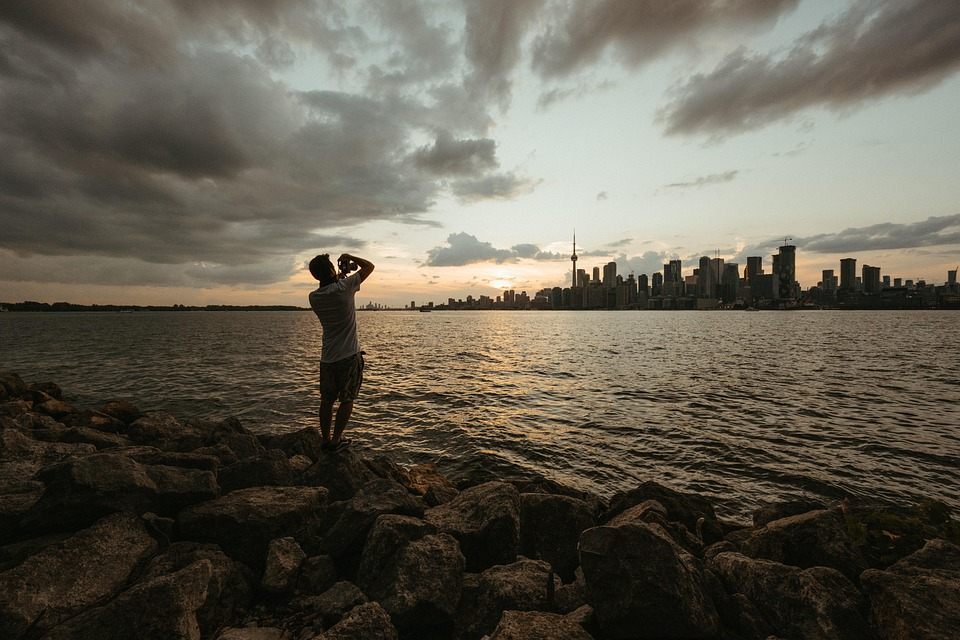
By the 1970s and 1980s, the skyline started to signal a new era. The CN Tower opened in 1976, a feat of engineering that placed Toronto on the global map and marked the redevelopment of former rail lands into public attractions and civic spaces (Timepath). Office towers, cultural venues, and later, waves of condominium towers reflected the city’s shift to finance, technology, and creative industries.
Multiculturalism, formalized nationally in 1971 and embraced municipally, shaped everything from school programs to festivals. Demographic patterns changed rapidly: by 2011, residents of Chinese origin represented roughly 12 percent of the city’s population, nearly matching English-origin residents, a data point that captures the breadth of post-1960s immigration.
Rights Movements, Festivals, And An Expanding Public Sphere
Community activism transformed civic life. The 1981 Toronto bathhouse raids triggered mass demonstrations that helped redefine LGBTQ2+ rights in Canada and set Toronto on a path toward a more inclusive public square. Caribana began in 1967 as a Centennial celebration of Caribbean heritage and grew into North America’s largest street festival of its kind, amplifying the city’s Afro-Caribbean cultures and creative economy.
In 1998, the province amalgamated six municipalities into a single City of Toronto, centralising governance for planning, transit, and services, and reframing a patchwork metropolis as one civic unit. The new city adopted a motto, Diversity Our Strength, that acknowledges how waves of migration had become the defining feature of local life.
Key Eras And Their Lasting Imprints
Era | Hallmarks | Lasting Imprint |
Indigenous Presence To 1787 | Tkaronto, Carrying-Place Trail, diplomacy | Place names, routes, stewardship models, ongoing cultural resurgence |
Colonial Settlement 1793–1834 | Fort York, Loyalist town, administrative capital | Civic grid, parliamentary institutions, Toronto’s name restored |
Industrial Growth 1850s–1910s | Railways, distilleries, shipyards, 1904 fire | Manufacturing wealth, working-class neighbourhoods, Union Station |
Urbanization 1945–1970s | Metro government, subway, expressways | Regional planning, suburban form, transit-first identity |
Global City 1980s–Present | CN Tower, multicultural policy, festivals, amalgamation | Finance-tech economy, diverse communities, dense core and tall skyline |
How History Lives In Neighbourhoods Today
Indigenous Revitalization And Public Memory
Public memory is changing. Land acknowledgements open civic events, and Indigenous artists and educators are reshaping how Toronto presents itself in museums, classrooms, and street festivals. The City’s Indigenous Arts Festival and National Indigenous Peoples Day ceremonies centre local nations’ contributions and contemporary creativity. This gradual rebalancing helps residents see the city not as a story that began in 1793, but as a layered place where ancient routes and modern streets intersect.
Market Streets, Campuses, And Repurposed Factories
Industrial shells became cultural engines. The Distillery District reimagined a vast Victorian complex as a walkable hub for galleries, theatre, and cafés, linking heritage architecture to a creative economy. Union Station’s restoration reaffirmed the role of rail and transit in a megaregion that relies on daily flows of commuters and visitors. Universities expanded their campuses and their reach into surrounding streetscapes, weaving research and student life into older residential blocks.
Immigration continues to remake neighbourhoods. From Little India to the Danforth, from Chinatown to Somali restaurants on Rexdale Boulevard, the city’s avenues tell the story of families who turned storefronts into community kitchens and weekend parades into civic traditions. Data tracks this change across decades, but it is easiest to feel on a Friday night when a street festival closes a block to traffic and opens it to sound, dance, and shared meals.
Kensington Market: waves of newcomers, vintage storefronts, global groceries
The Danforth: Greek eateries, community parades, local entrepreneurship
Rexdale And Scarborough: suburban main streets where new Torontonians build cultural life
Historic corridors: streetcars, patios, and layered signage that reveal decades of turnover
Policies, People, And The Shape Of Daily Life
Planning Decisions And Their Ripple Effects
Toronto’s postwar Metro experiment linked suburban growth to shared services, tempering fragmentation and building the capacity to invest in transit. Subways and expressways altered how people moved and what neighbourhoods could become. Highway ramps bifurcated some communities even as transit lines stitched others together. Later, a planning shift prioritized complete streets, parks, and transit-oriented development, and turned former industrial lands into mixed-use districts.
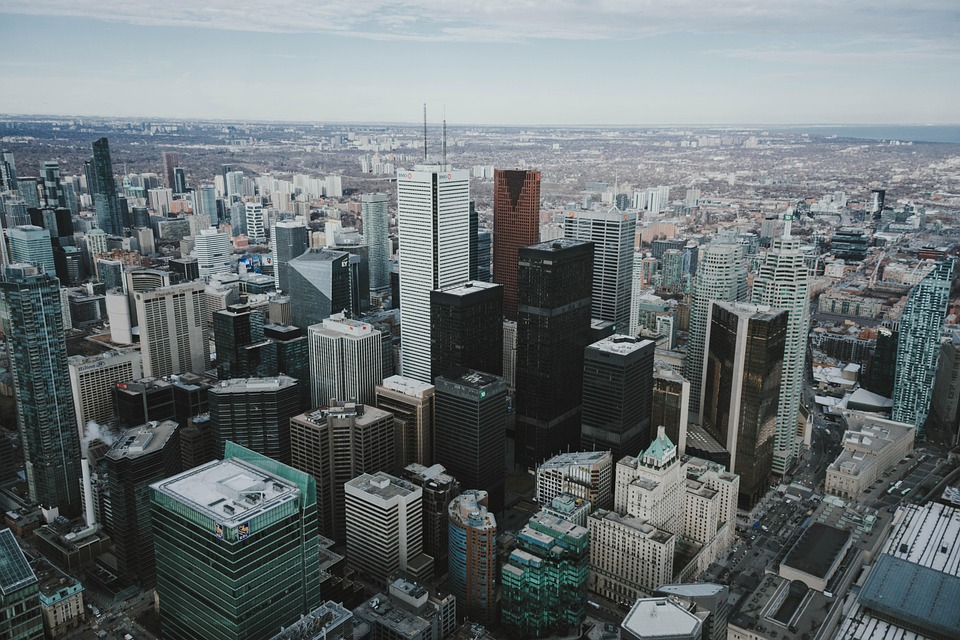
As the economy tilted toward services, downtown towers concentrated corporate power while old factories found second lives as studios and theatres, highlighting Toronto's urban history as a continuous process of adaptation and reuse. The same pattern that once carried grain to distilleries now carries audiences to theatres and students to labs. Housing affordability and gentrification remain pressing challenges, shaped by earlier zoning and infrastructure choices that still constrain supply and access.
Culture, Rights, And Public Space
Toronto’s social fabric has been shaped by both celebration and struggle. The Christie Pits riot of 1933 revealed the costs of xenophobia and spurred immigrant communities to organize in defence of their neighbours. The bathhouse raids galvanised a rights movement that made public space safer and pride more visible. Caribana’s success opened doors for city-supported festivals that give cultural expression a central place in civic identity. Together these histories inform the city’s approach to inclusion and to the idea that streets, parks, and squares can be stages for belonging.

Seeing the History of Toronto for Yourself
A walk along the lakefront shows how rail corridors became linear parks and how a communications tower became an emblem of ambition. A ride on the Yonge line connects farm hamlets turned suburbs to a financial core that once loaded sacks of grain at wooden wharves. The routes are old, the vehicles are new, and the city keeps rewriting the script.
Fort York: colonial origins meet modern skyline
The CN Tower: engineering statement turned civic symbol
Union Station To St. Lawrence Market: rails, warehouses, and the city’s oldest continuous market
The Distillery District: industrial heritage adapted for arts and street life
Toronto’s past, rich in Canadian history, is not a closed chapter. It is a field guide for decisions taken in council chambers and kitchen tables, a reminder that every newcomer and every neighbourhood has added something lasting. The place called Tkaronto carries those layers forward, turning old paths into tomorrow’s streets and keeping the city open to the next idea, the next festival, the next neighbour.



Comments