
Story of Terry Fox: Ontario Edition

Terry Fox arrived in Ontario as a determined young runner with a clear goal, raise money for cancer research, one dollar for every Canadian. He left Ontario as a national figure whose cause had caught fire in a way that was hard to imagine when he started on the Atlantic coast.
Ontario was not just a long stretch of road on the Marathon of Hope. It became the province where the run’s meaning, visibility, and fundraising power came together at full scale, powered by dense communities, strong local organizing, and a wave of people who decided they wanted to be part of something bigger than themselves.

Ontario As The Turning Point
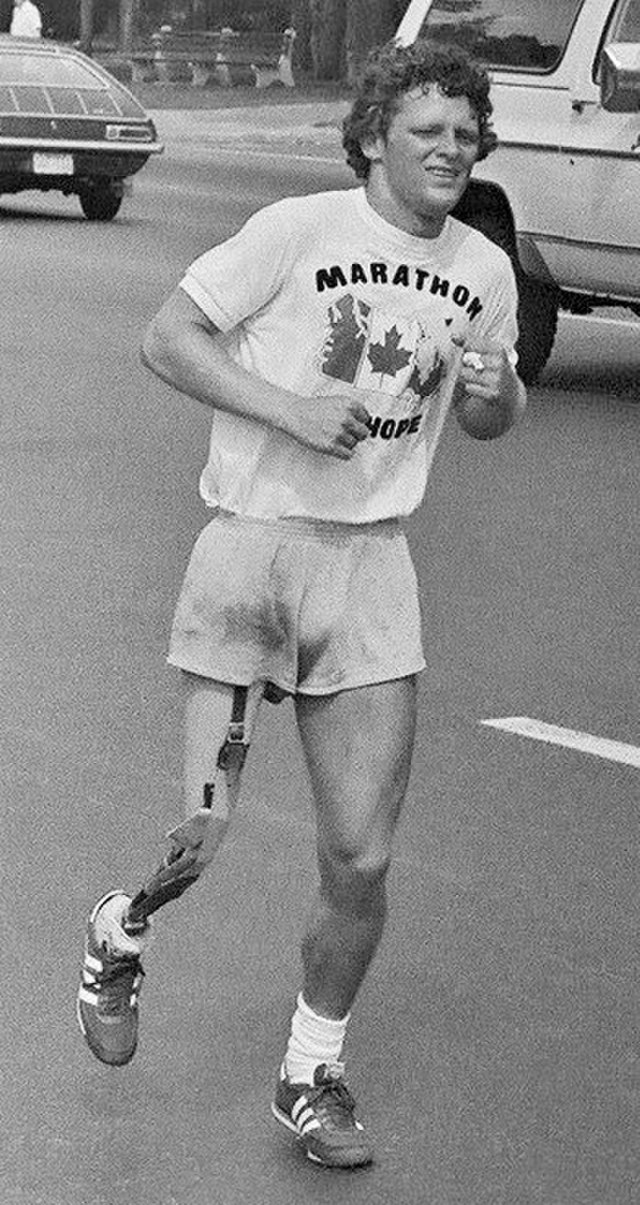
By the time Fox reached Ontario in late June 1980, he had already run across the Maritimes and Quebec on a prosthetic leg, day after day, often with limited attention and modest crowds. Ontario changed the rhythm of the Marathon of Hope.
Population mattered, but not only because it meant more potential donors. Ontario’s many municipalities, service clubs, schools, sports organizations, and local media created a ready-made network for rallies, donation drives, and roadside support. That structure helped convert admiration into action.
A simple pattern began repeating: Fox would run into town exhausted, speak briefly about why cancer research needed funding, and the community would respond with cheques, pledge sheets, and volunteers who ran beside him for a few kilometres simply so he did not have to do it alone.
Crossing Into Ontario At Hawkesbury
Fox crossed into Ontario near Hawkesbury on June 28, 1980. The reception was immediate and large, and Ontario Provincial Police support helped with traffic and safety for what was about to become the busiest portion of his route.
That first Ontario welcome did something emotionally important. It signalled that the Marathon of Hope could be embraced as a shared project, not only the bold idea of one person. Ontario’s roads and towns turned the run outward, away from a small support crew and toward the public.
Momentum is hard to measure in real time, yet Fox’s own words in his journals show he felt it. In Ontario, he could see belief spreading ahead of him, town by town.

Ottawa: Ceremonies, Crowds, And A National Stage
Ottawa gave Fox a kind of civic welcome that felt like a hinge in the story. On June 30 and July 1, he was celebrated publicly, including a meeting at Rideau Hall and high-profile appearances that placed his run squarely in the national spotlight. The day included a ceremonial kickoff at an Ottawa Rough Riders home game, met by a standing ovation from more than 16,000 fans, as described in the Ottawa Historical Society’s account of the Marathon Of Hope reaching Ottawa.
Ottawa’s significance was not only symbolism. It also validated the fundraising ask. When a cause is seen as legitimate by institutions, it becomes easier for everyday people to participate without hesitation. In Ottawa, the run looked and sounded like a national effort.
It also created a new tension for Fox. He wanted every minute possible for running, yet Ontario communities wanted to honour him. That push and pull, between the relentless physical schedule and the growing demands of public attention, became part of the Ontario chapter.
A Quick Timeline Of Key Ontario Stops
Ontario included dozens of communities, from border towns to big cities to long, quiet sections of Northern Highway 17. The table below highlights several stops that are often cited because they show how support, fatigue, and fundraising surged at different points.
Date (1980) | Community | Why It Matters In Ontario |
June 28 | Hawkesbury | Major welcome at the Ontario border, signalling a shift in public attention. |
June 30 to July 1 | Ottawa | National-stage ceremonies and a stadium ovation, plus intense media visibility. |
July 5 | Sharbot Lake | One of the toughest days physically, including collapse from exhaustion noted in his journal. |
July 10 | Scarborough | Large civic-centre rally, formal honours, and an example of municipal-level organizing. |
July 11 | Toronto | A defining media moment and a burst of fundraising energy in the province’s biggest city. |
July 17 | London | A community reception where other patients and families joined the story directly. |
July 28 | Gravenhurst | His 22nd birthday, a packed event, and a morale-boosting show of local generosity. |
Aug. 3 to 4 | Sudbury and Whitefish | Public reception and the midway mark of his planned distance. |
Sept. 1 | Thunder Bay | The final day of running before he announced the cancer had returned. |
The Ontario route matters because it captures the full range of the Marathon of Hope: celebration, solitude, pain, joy, and the steady transformation of a personal mission into a national one.
The Greater Toronto Area: When The Country Started Watching
Southern Ontario brought density, traffic, and heat, but also the kind of crowds that made the Marathon of Hope impossible to ignore. Scarborough’s civic centre event stands out as a clear example of Ontario’s municipal welcome, including the symbolic gesture of naming Fox honorary mayor for the day, documented in the City of Toronto Archives exhibit on Scarborough welcoming Terry Fox.
Toronto itself became a public amplifier. Fox ran through streets lined with supporters, and his day in the city is often remembered for connecting sport, celebrity attention, and fundraising in a way that still felt grounded. He repeatedly tried to redirect attention away from himself and back to research funding.
After the emotional lift of those crowds came the next morning’s reality: the run always returned to the same work. Wake up. Tape the stump. Start running. Manage pain. Keep going.
Ontario showed that inspiration can be both dramatic and practical.
After days like Scarborough and Toronto, volunteers began showing up more consistently, sometimes running alongside him, sometimes collecting donations, sometimes simply cheering at the shoulder of the road.
Here are a few ways Ontario communities helped turn attention into outcomes:
Street-Level Welcomes: crowds that made small towns feel like stadiums
Bold Local Fundraising: cheques, pledge drives, and same-day collections
Volunteer Energy: runners, cyclists, and organizers who made each stop possible
Media Concentration: radio, newspapers, and television that carried the story province-wide
Southwestern Ontario: London And The Meaning Of Company
As Fox moved through communities like Oakville, Guelph, and into London, the receptions often blended celebration with something quieter: people who had personal experience with cancer. Families came out with handmade signs. Children ran short stretches beside him. Patients were introduced at community gatherings.
In London, thousands gathered at a public reception, and a young leukemia patient ran the final mile with Fox. Moments like that clarified what Ontario made visible: this was not only a feat of endurance, it was a public act of solidarity.
Fox’s own journal entries, preserved in the Terry Fox Foundation’s timeline of the Marathon of Hope, capture how quickly emotions could swing within a single day, from gratitude to frustration to exhaustion, then back to gratitude again.
Northern Ontario: Long Roads, Big Hills, And Deep Resolve
Past Sudbury, Ontario becomes vast in a different way. Communities are farther apart, shoulders can feel narrow, and weather can turn quickly. This portion of the route is sometimes romanticized as pure wilderness, yet it was also where many Ontarians showed up in surprisingly concentrated bursts, proving that distance does not erase community spirit.
Sudbury provided a major civic reception, including local donations and public praise. Whitefish marked the halfway point of Fox’s planned cross-Canada distance, though he learned the team’s odometer had been off, meaning he had already passed that milestone without knowing it.
Then came days defined less by ceremony and more by grind: heat, humidity, mechanical issues with the van, and the hard topography of the North Shore. The Montreal River hill, the climbs around Wawa, and the demanding stretches along Lake Superior became physical tests that Ontario will always own in this story.
This is also where the Ontario landscape adds a deeper layer of meaning. The Marathon of Hope was not designed for comfort. Northern Ontario made that unmistakable.
Thunder Bay: The Place Where The Run Stopped

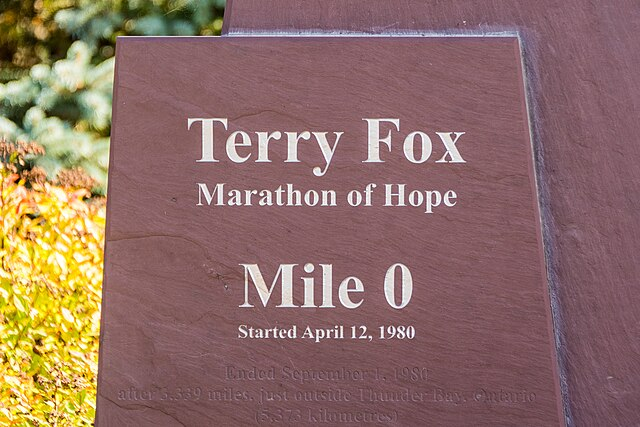
On September 1, 1980, outside Thunder Bay, Fox suffered chest pain and a severe coughing fit. He stopped after one last mile and went to hospital. The next day, he announced that his cancer had returned and that he had to halt the Marathon of Hope.
That moment is inseparable from Ontario’s importance. The province had helped turn the Marathon into a national phenomenon, and Ontario is also where Canadians first faced the possibility that willpower and courage do not guarantee the outcome we want.
Even then, Fox stayed focused on the purpose. The run was never meant to be a personal victory lap. It was meant to raise money and attention for research, and Ontario had already pushed that effort into a new category of scale.
How Ontario Carried The Legacy Forward
Ontario’s response did not end when the running stopped. It continued through public commemoration, legislation, annual events, and a clear commitment to cancer research funding.
Ontario formally recognizes the second Sunday in September as Terry Fox Day through the Terry Fox Day Act, which reflects how closely his story is tied to school calendars, community runs, and early-fall traditions across the province.
The Ontario Legislature also recorded the province’s public mourning and support for research, including the naming of the Thunder Bay to Nipigon section of the Trans-Canada Highway as the Terry Fox Courage Highway, noted in the Ontario Legislative Assembly Hansard from June 29, 1981.
Ontario’s living legacy is not only about statues or place names. It is a habit of participation that returns every year.
If you want to trace Ontario’s Terry Fox story in a concrete way, these are meaningful starting points:
roadside memorial lookouts near Thunder Bay
community routes that still host annual runs
school fundraising traditions that restart each September
local archives preserving photos, posters, and civic proclamations
Ontario’s chapter of the Marathon of Hope is a reminder that courage can be contagious, and that a province’s response can help a single act become a shared national promise.


Comments